Finexer Open Banking Blogs
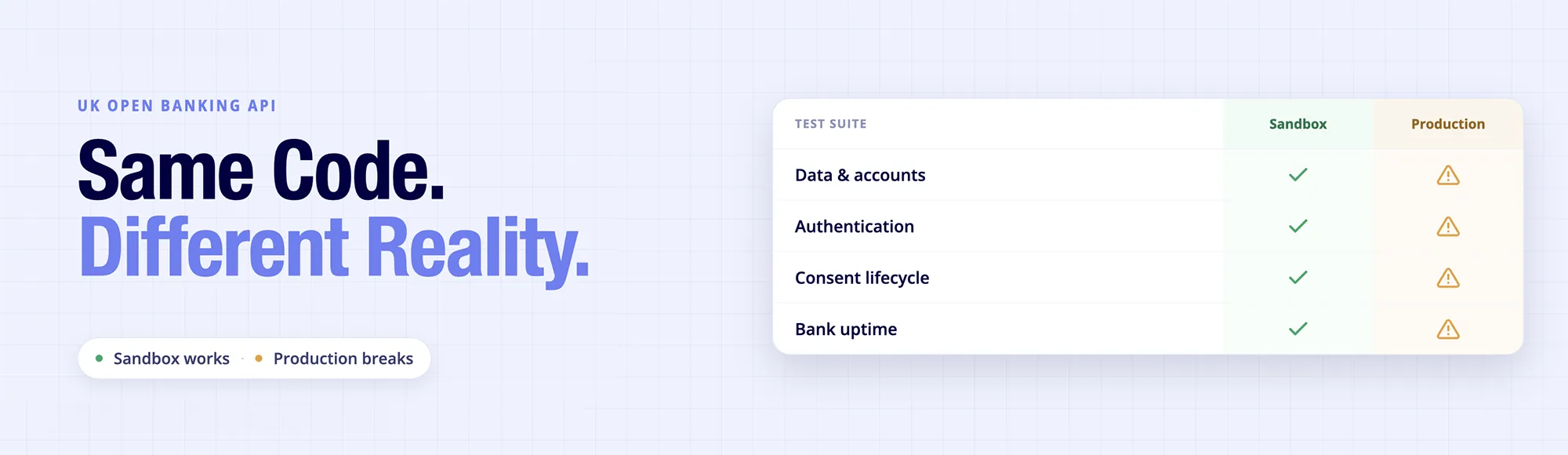
UK Open Banking API: Why Sandbox Works, Production Breaks
UK open banking API integrations pass every sandbox test and still break in production. The reason: sandbox tests your code, production tests the banks, and banks vary. This guide covers the CMA9 gap, the six differences that cause real failures, and the reliability checklist that closes them.

Bank Account Verification in the UK: How to Confirm Customer Details Instantly (Without Manual Checks)
A misdirected payment doesn’t announce itself, it just leaves quietly into an account that looks legitimate until it’s gone. This guide compares bank account verification methods pitted head to head: micro-deposits, Confirmation of Payee and instant bank account verification via Open Banking, so businesses choosing a bank account verification service know which one actually catches a mismatch before money moves.
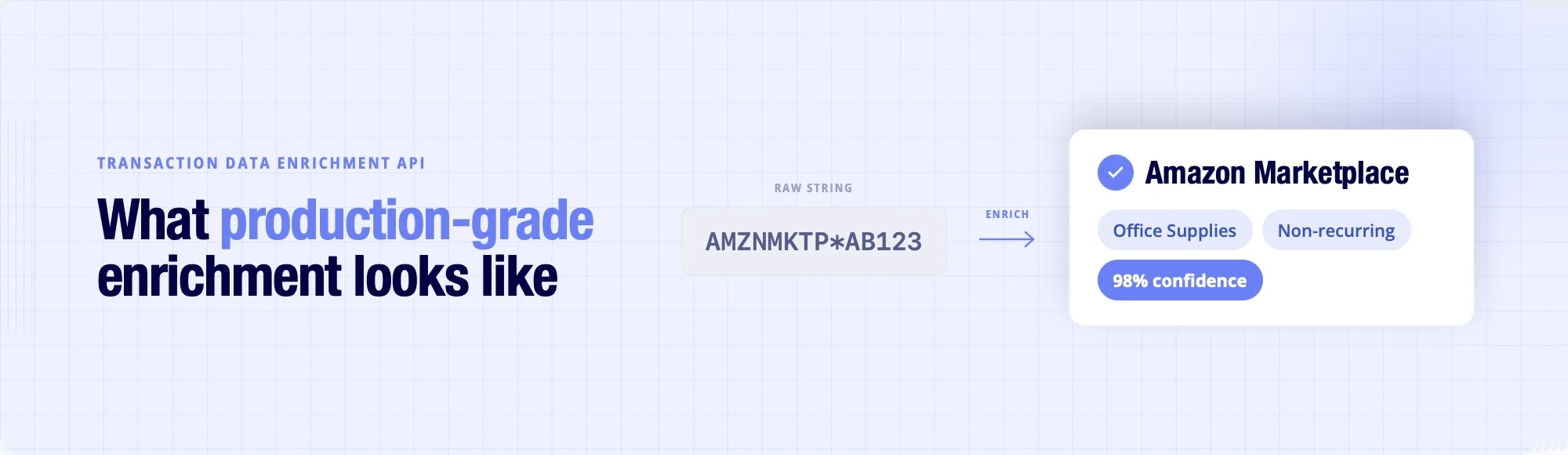
UK Transaction Data Enrichment API: Pricing & Accuracy
“AMZNMKTP*AB123” tells your reconciliation engine nothing. A transaction data enrichment API turns that string into Amazon Marketplace, Office Supplies, non-recurring, in one API call. This guide covers merchant-match accuracy, data enrichment API pricing models, structured JSON schema across UK banks and what separates production-grade enrichment from a categorisation feature bolted onto a data feed.
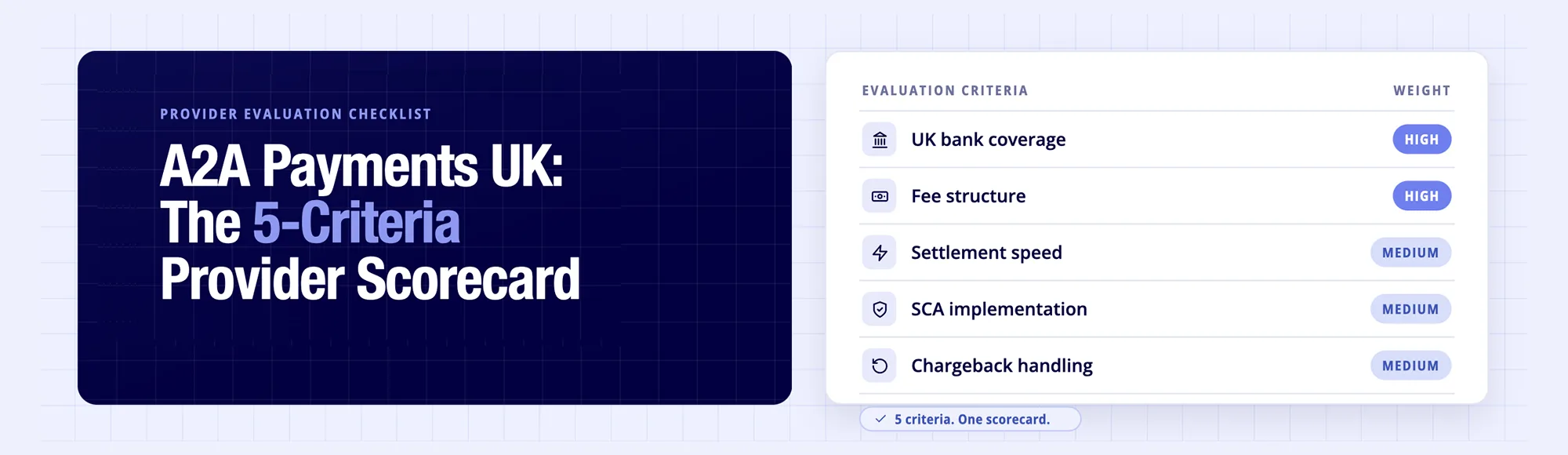
A2A Payments UK: Provider Evaluation Checklist
UK A2A adoption trails the EU significantly, and the gap usually comes down to picking the wrong provider. This checklist scores account-to-account payments providers on fee structure, settlement speed, chargeback handling and SCA implementation, so platforms can compare account-to-account (A2A) payments options on evidence, not marketing copy.

Bookkeeping Automation Software in the UK: What Actually Powers It
Compare bookkeeping automation software with manual bookkeeping to see how OCR receipt capture, bank-feed reconciliation and MTD compliance reduce repetitive work. Learn why accounting process automation increasingly depends on reliable bank data, helping UK businesses spend less time on admin and more time running their business with confidence.

Open Banking Providers UK: The Evaluation Framework Buyers Actually Need
Compare open banking providers using a practical evaluation framework instead of another vendor list. Learn how open banking solution providers differ across bank coverage, AIS and PIS capabilities, onboarding, pricing, and white-label deployment so your team can shortlist providers with confidence and choose infrastructure that matches long-term product goals.
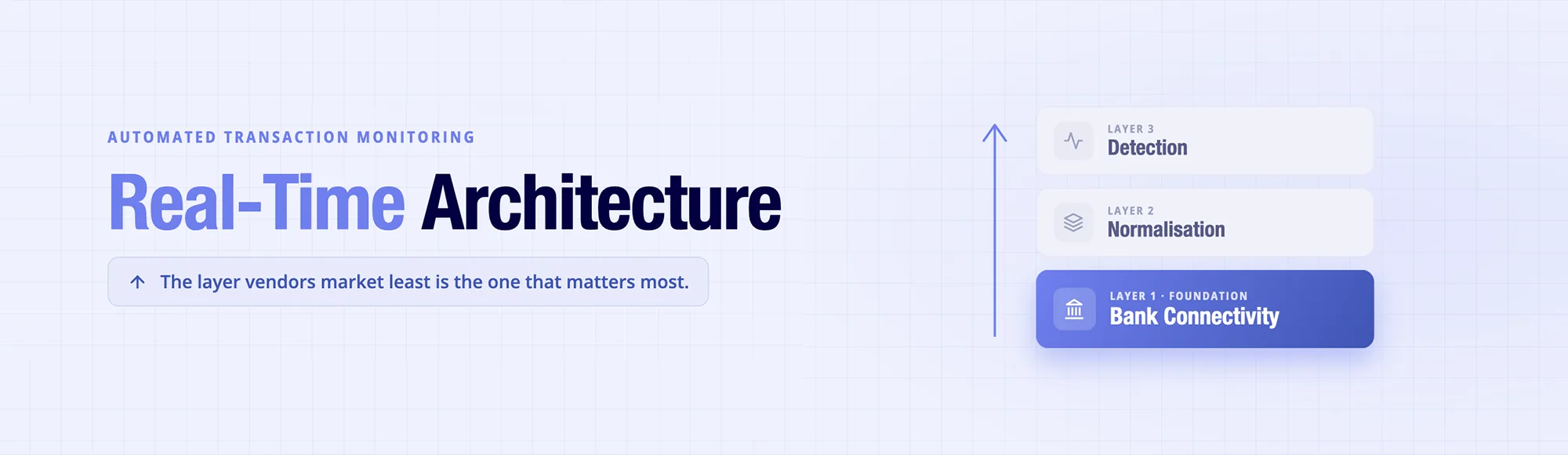
Automated Transaction Monitoring: Real-Time Architecture
Automated transaction monitoring only works if the bank data arriving is complete and current, not a batch file from last night. This guide breaks down the webhook architecture behind real production automated transaction monitoring systems, from payload structure to latency, and why partial bank coverage quietly degrades detection regardless of how sophisticated the monitoring logic is.
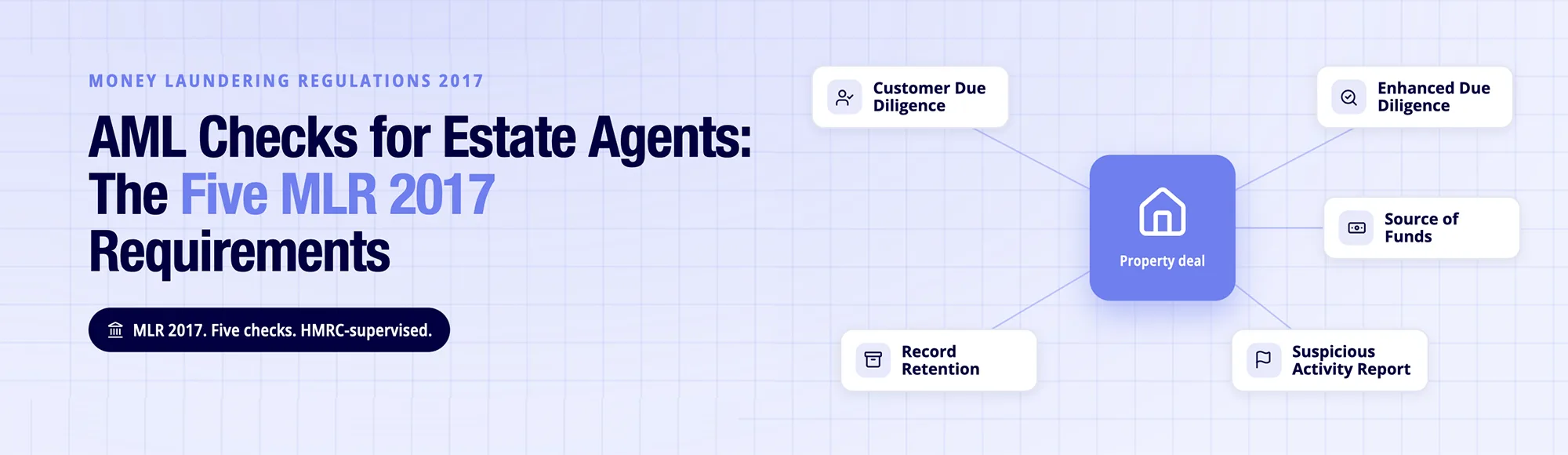
AML Checks for Estate Agents: MLR 2017 Requirements
AML checks for estate agents are set by MLR 2017: customer due diligence, enhanced due diligence, source of funds and 5-year records, supervised by HMRC. This guide covers the exact triggers, the red flags inspectors expect you to catch, current penalty rounds, and what changes in 2026 for UK property firms.
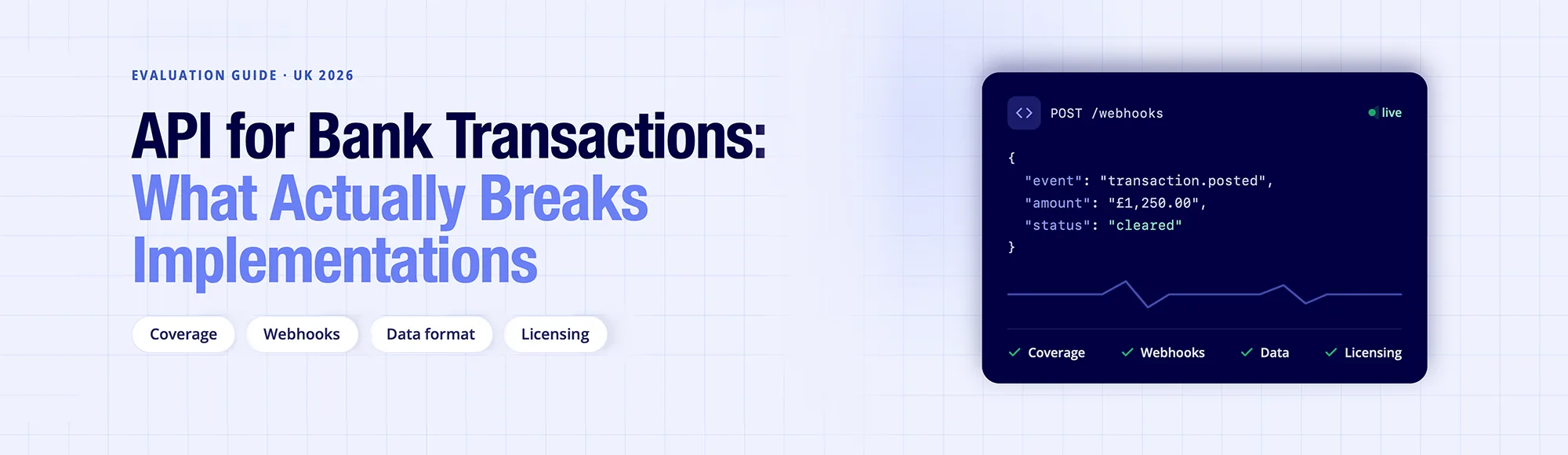
API for Bank Transactions: Evaluation Guide (UK 2026)
Choosing an API for bank transactions requires understanding failure modes, not just comparing features. This guide explores how providers differ in coverage gaps, webhook consistency, data quality, regulatory licensing, and real-world reliability, helping you build an integration that continues to perform when transactions, customers, and compliance are on the line.
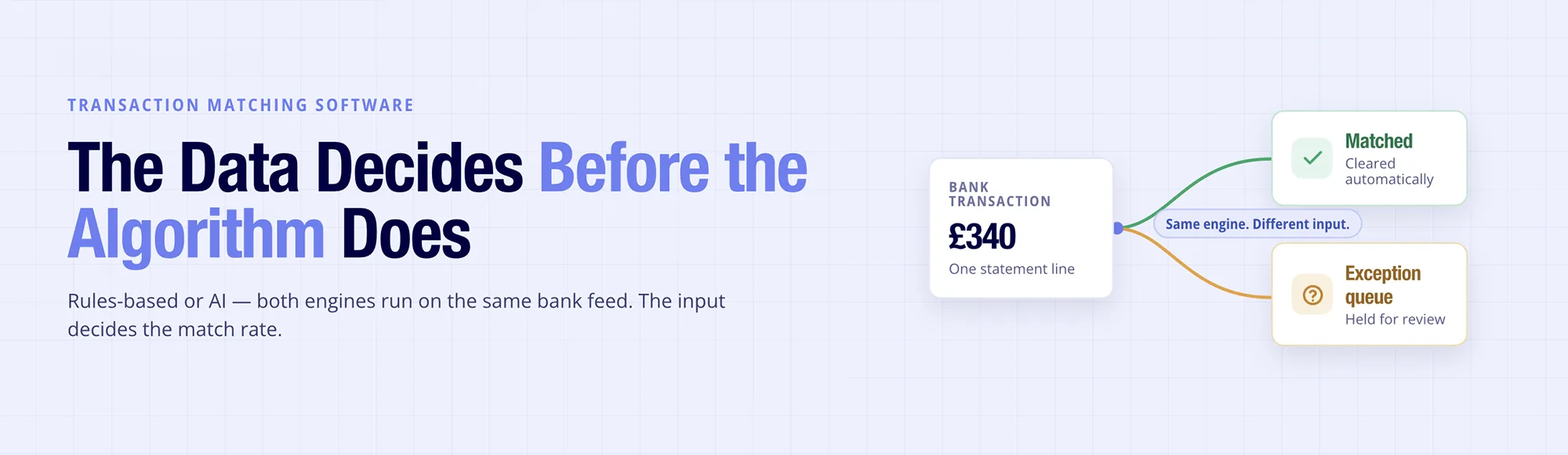
Why AI Transaction Matching Still Fails Without Structured Bank Data
Transaction matching software fails on data before it fails on logic. This technical explainer covers rules-based versus AI matching, why partial payments and batches break deterministic engines, the clean-data assumption enterprise close tools make, and why fixing the bank-data layer lifts every matching engine on your shortlist at once.
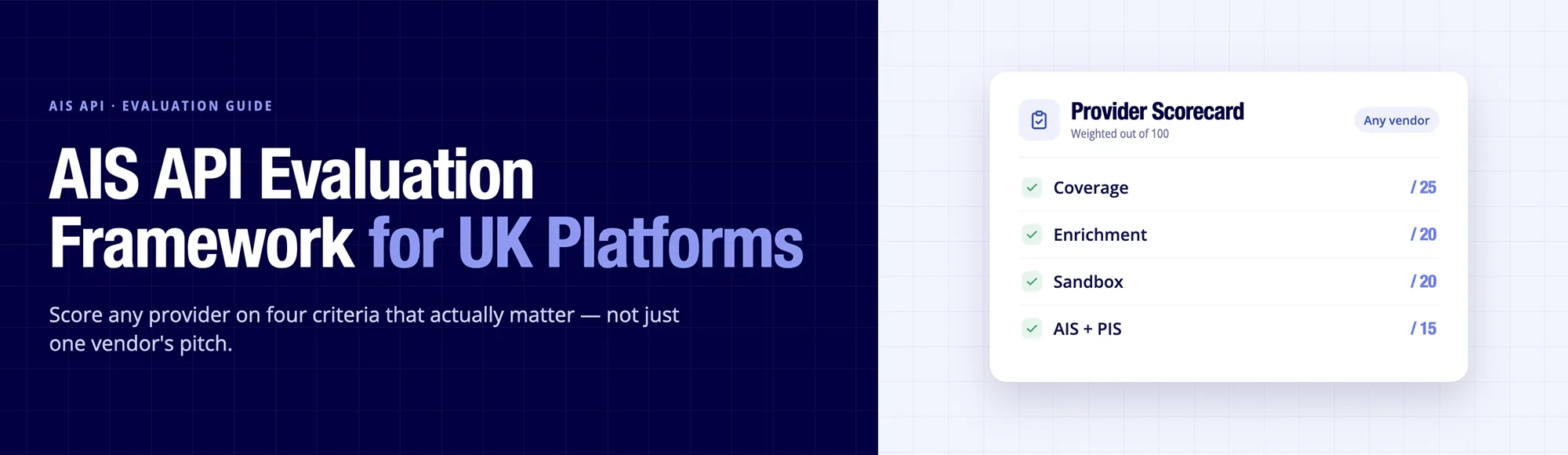
AIS API Evaluation Framework for UK Platforms
Choosing an AIS API in 2026? This neutral evaluation guide helps UK platform teams compare providers using the four criteria that actually matter: coverage depth, data enrichment, developer experience, and AIS+PIS bundling. Complete with a practical scoring table and FAQ, it helps you shortlist vendors with greater confidence before implementation.

Expense Management Automation: Bank-Verified vs OCR Capture
Expense management automation promised to end month-end receipt chasing, yet OCR capture alone cannot confirm a payment actually happened. This guide compares receipt-only tools with bank-verified matching for UK finance teams, covering real-time policy flagging, GL-code auto-categorisation and continuous corporate card reconciliation, plus a practical shortlist of questions to ask before choosing your next platform
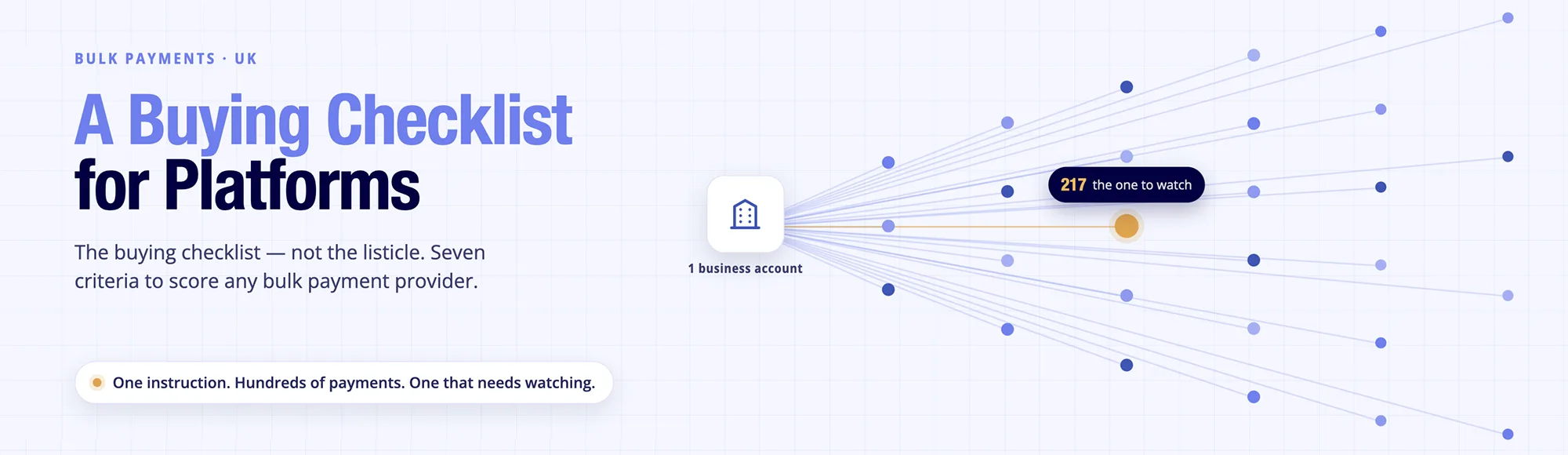
Bulk Payments UK: A Buying Checklist for Platforms
Bulk payments let a platform send one instruction and pay hundreds of recipients, but the provider you choose decides whether your users get per-payment status or a three-day wait. This UK buying checklist covers rails, coverage, pricing and integration, so platform teams can evaluate providers with the right questions.
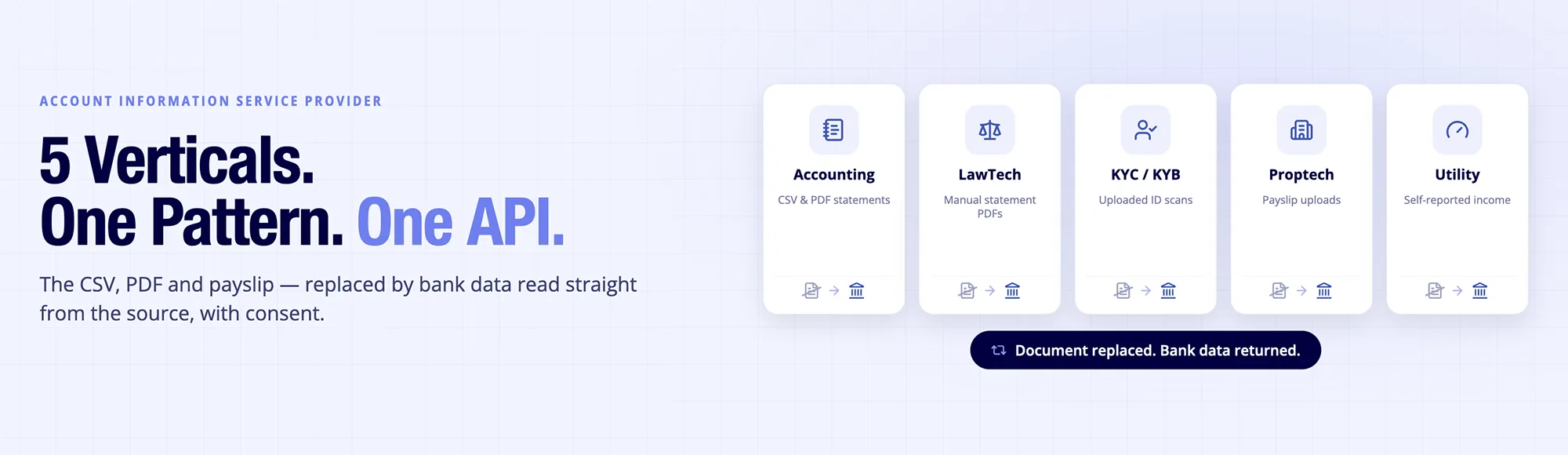
Account Information Service Provider: 5 Real Examples
Every account information service provider example you’ve read stops at the regulatory definition. This guide skips that and shows five real ones: an accounting SaaS reconciling client transactions, a LawTech platform verifying source of funds, and three more. See exactly what an account information services provider returns, and where it fits your stack.
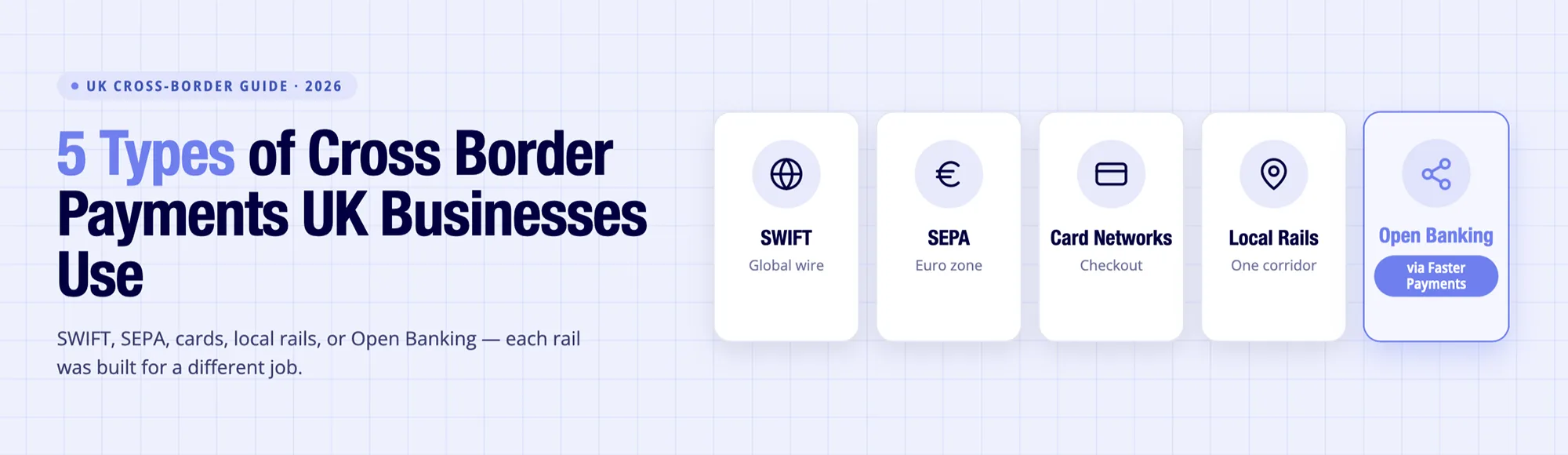
5 Types of Cross Border Payments UK Businesses Should Know in 2026
There are five main types of cross border payments: SWIFT, SEPA, card networks, local rails, and API-based Open Banking. Each was built for a different job. This UK guide compares them on cost, speed and coverage, and shows which cross border payment methods fit which payments your business actually sends.
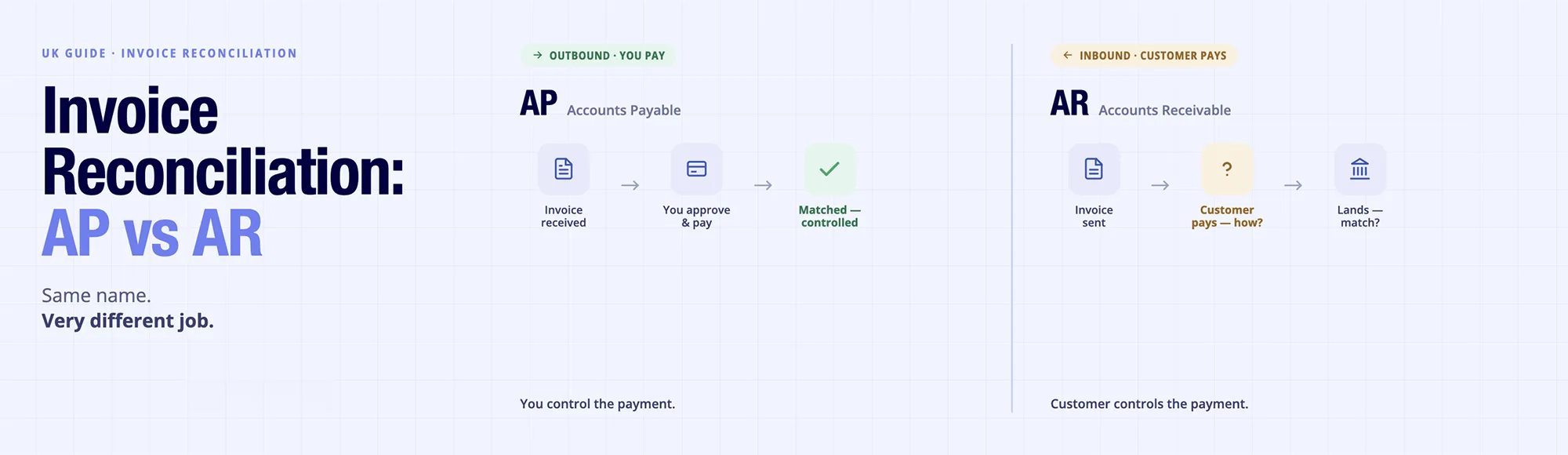
Why Invoice Reconciliation Still Breaks in Modern Finance Workflows
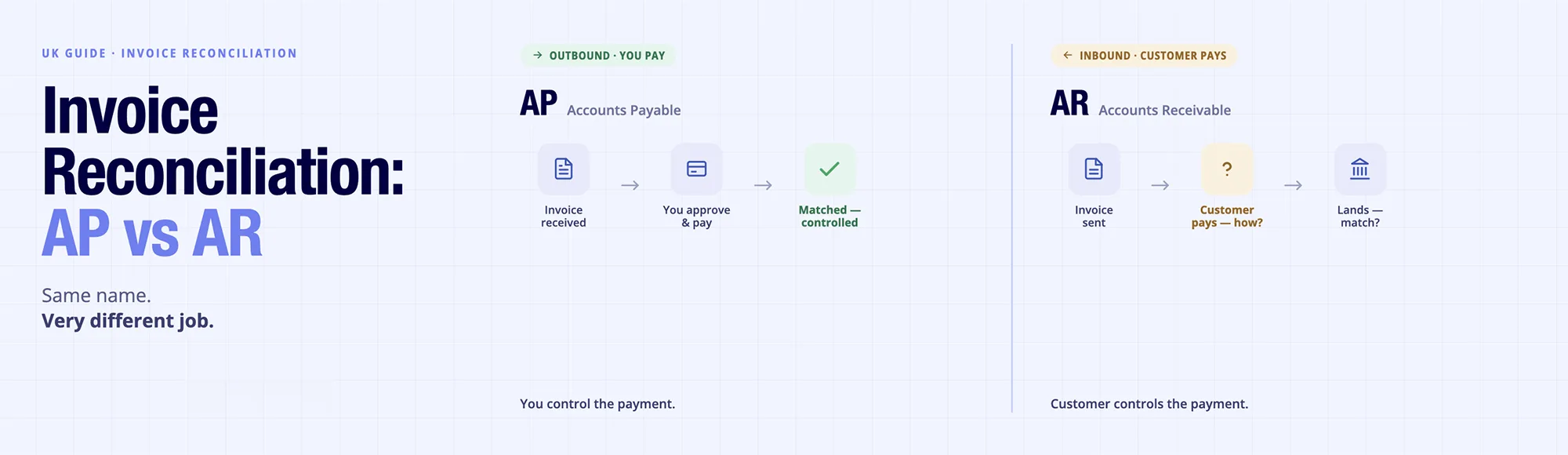
Invoice reconciliation covers two different jobs: checking supplier invoices before you pay them (AP) and matching incoming payments to the invoices you’ve issued (AR). This UK guide explains both sides, the matching methods involved, and a step-by-step process for reconciling invoices accurately with current government data and the 2026 MTD context.
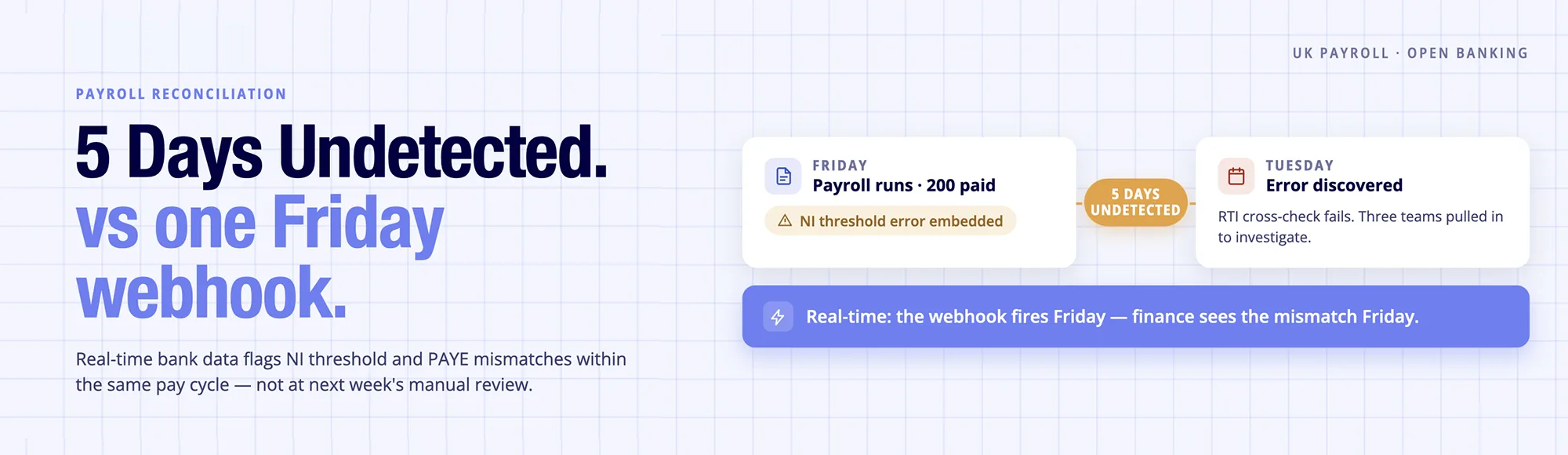
Payroll Reconciliation: Real-Time Bank Data Fixes This
A miscalculated NI threshold sends one employee’s payroll reconciliation into a three-hour manual investigation. This guide walks you through how payroll reconciliation actually breaks, checkpoints to run before, during and after each pay cycle and how real-time bank data helps teams automate payroll payments and confirm PAYE and RTI matches without waiting for next-day bank feeds.
Automated Bank Reconciliation: ROI Calculator (UK)
Automated bank reconciliation ROI depends on transaction volume, not firm size. This guide runs the hours-saved maths across three tiers of client load, compares manual matching against automatic bank reconciliation and shows why MTD for ITSA’s quarterly cycle makes reconciliation automation a 2026 necessity rather than a nice-to-have for UK accounting firms.
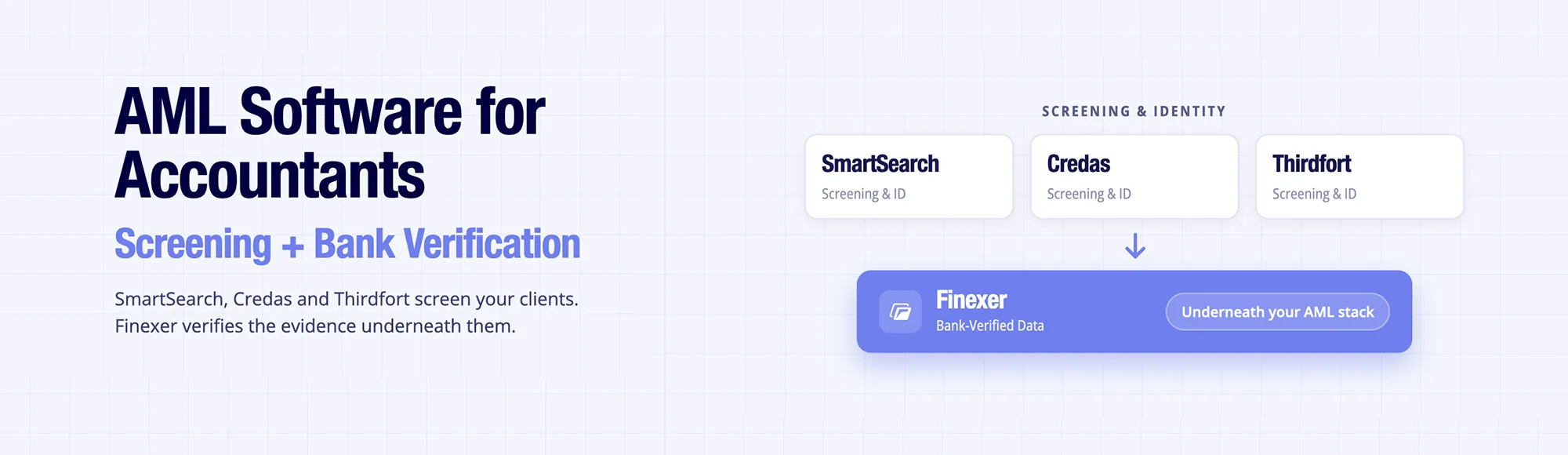
AML Software for Accountants: Transform Compliance with Bank-Verified Data
Choosing AML software for accountants means comparing SmartSearch, Credas and Thirdfort on sanctions and PEP screening, then deciding whether bank-verified data should sit underneath your compliance stack. This guide covers evaluation criteria, a full comparison table, the verification gap most tools leave open, and how Open Banking closes it for UK accounting and bookkeeping firms.
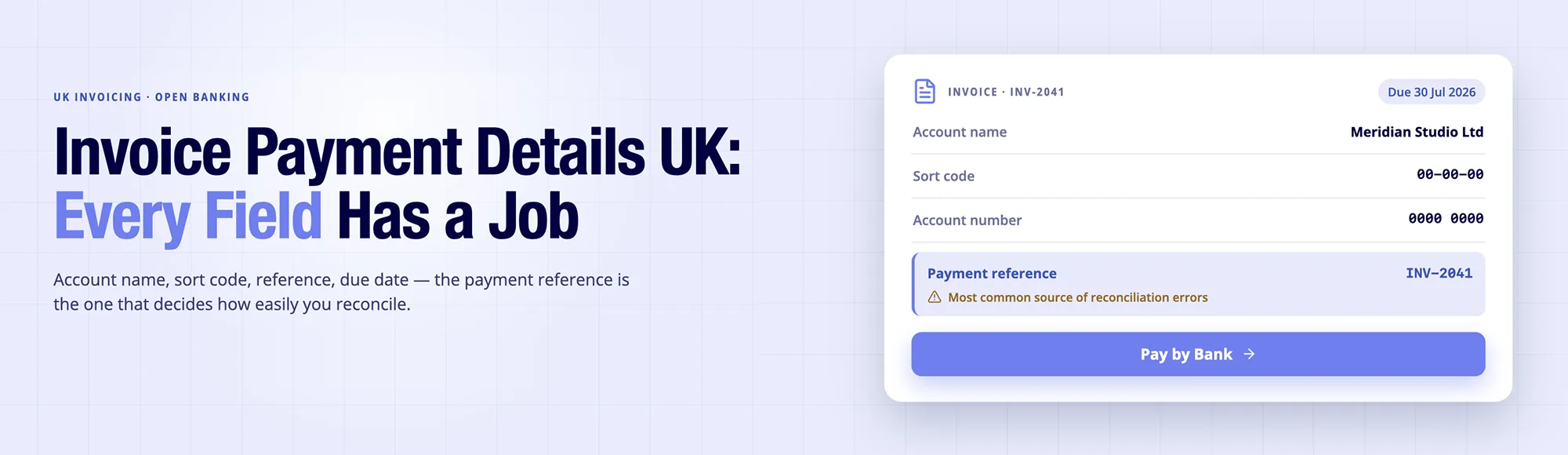
Invoice Payment Details UK: What Every Invoice Must Include
Invoice payment details explain exactly how customers should pay an invoice. Learn which invoice bank details UK businesses should include, why payment references matter for accurate reconciliation, what information every invoice should contain, and how Open Banking Pay by Bank reduces manual payment errors while simplifying customer payments.
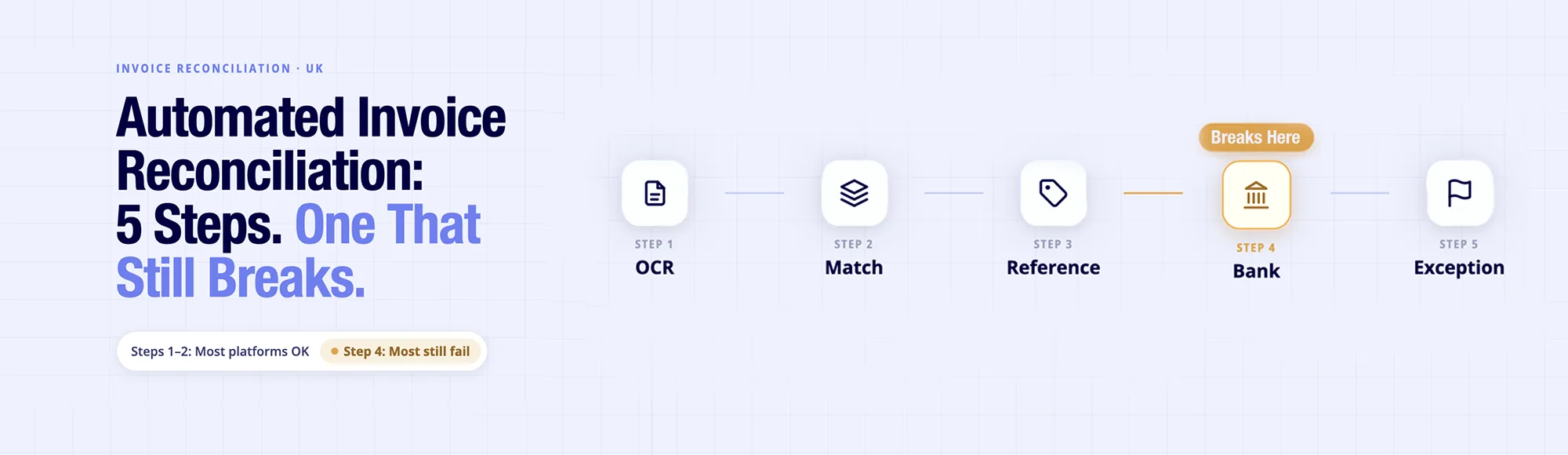
Automated Invoice Reconciliation: The 5-Step UK Process Flow
Automated invoice reconciliation only works when the invoice reconciliation process flow is built correctly from the start. This guide breaks the process into five numbered steps: OCR extraction, three-way matching, payment initiation, bank confirmation, and exception routing, so UK finance teams can see exactly where automation succeeds and where most platforms still fail.
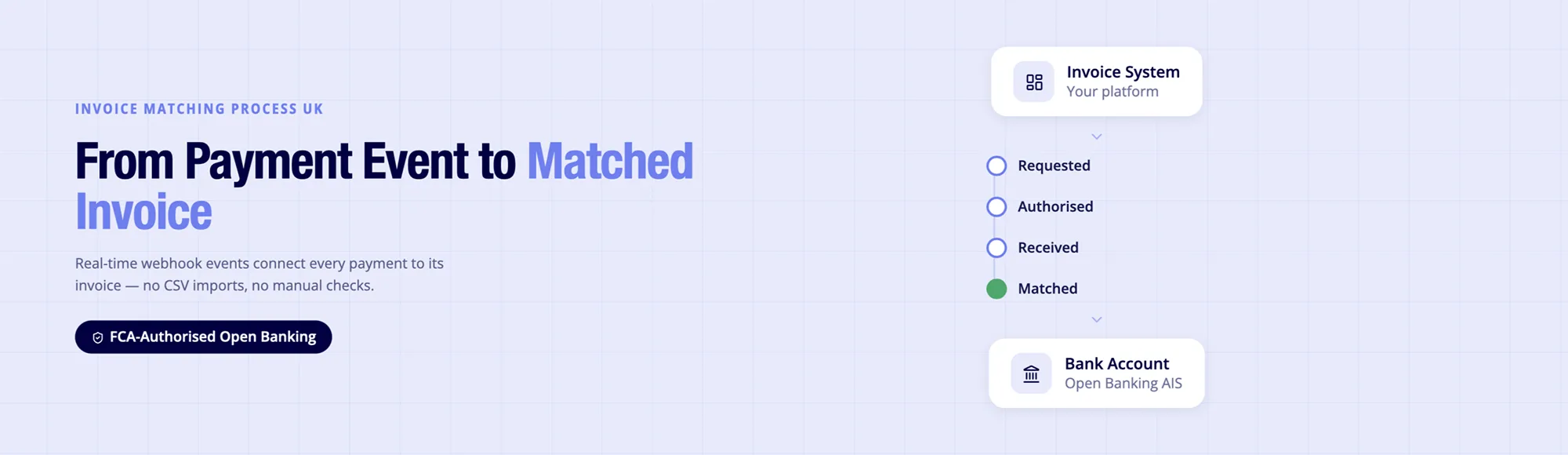
Invoice Matching Process: How UK Platforms Match Invoices to Payments
The invoice matching process helps finance teams automatically reconcile payments against outstanding invoices. This guide compares leading UK invoice matching software, explains how the invoice reconciliation process works across platforms and shows where Open Banking AIS delivers real-time bank transaction data for faster, more accurate payment matching than traditional bank feeds.

Global Payout Solution: UK Platform Infrastructure Guide
Choosing the right global payout solution affects settlement speed, FX costs, and payment visibility. Compare five leading providers, including Tipalti, Trolley, Wise, Airwallex, and Finexer, across API capabilities, supported corridors, per-payout tracking, and infrastructure to find the best fit for your platform.
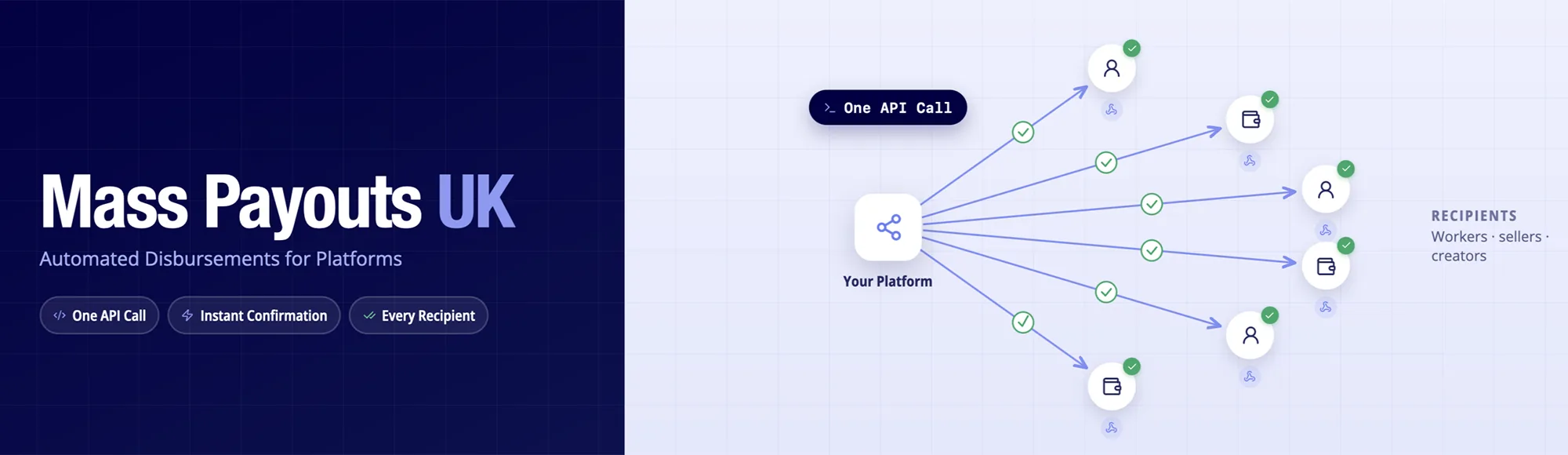
Mass Payouts UK: Automated Disbursements for Platforms
Mass payouts via Open Banking PIS solve gig platform payment friction- instant Faster Payments settlement, per-payout webhook status, and zero BACS delays. For marketplace platforms, delivery apps, and affiliate networks processing high-volume disbursements to workers, sellers, and creators. Per-transaction pricing, all UK banks.
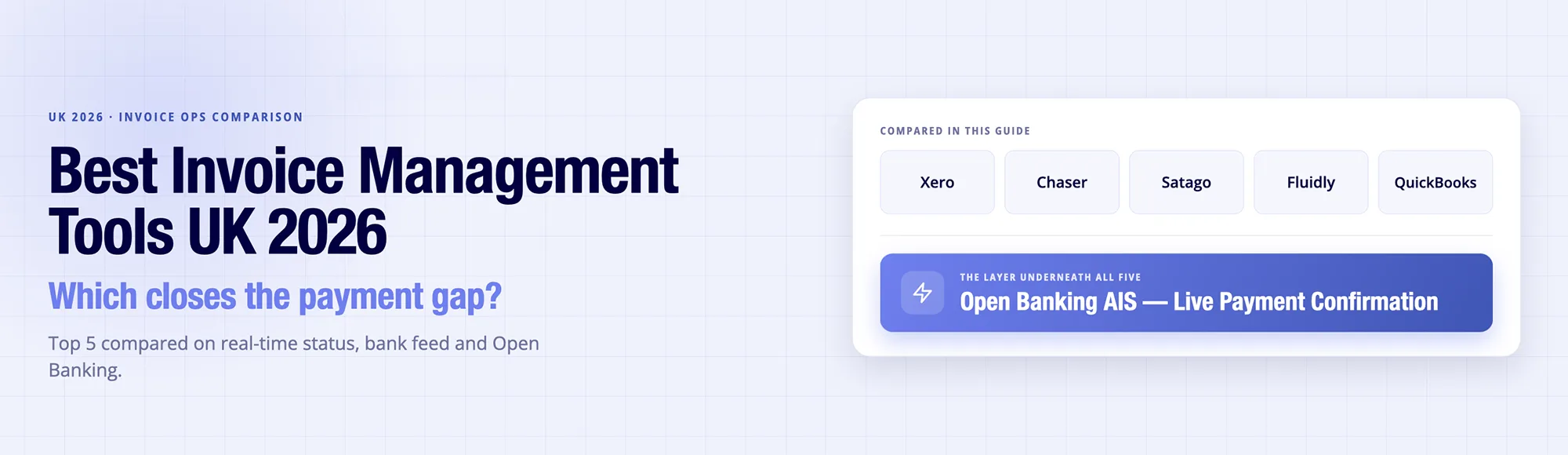
Best Invoice Management Tools UK 2026: Top 5 Compared
Compare the best invoice management tools in the UK, including Xero, Chaser, Satago, Fluidly and QuickBooks. Learn how they differ on payment tracking, bank connectivity, invoice management process and where Open Banking improves payment visibility.
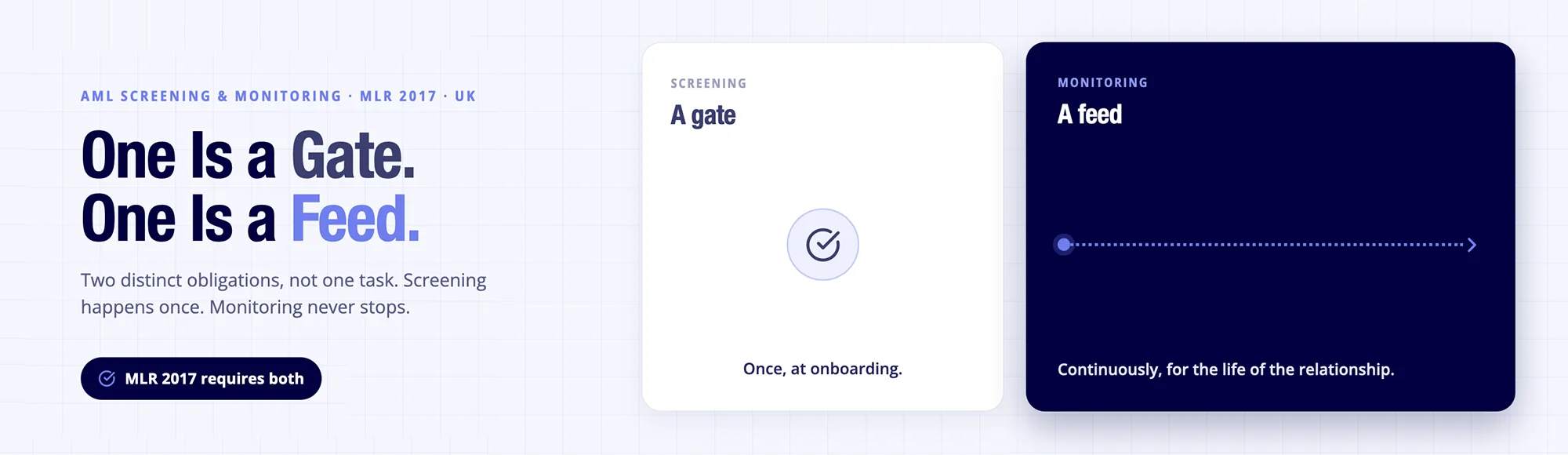
AML Screening and Monitoring: The Real Difference (UK)
AML screening and monitoring get treated as one task, but MLR 2017 requires both as distinct obligations: first, due diligence at onboarding, then continuous transaction monitoring for the life of the relationship. This guide separates the AML screening process from ongoing monitoring and shows where UK platforms most often let the monitoring obligation quietly lapse.
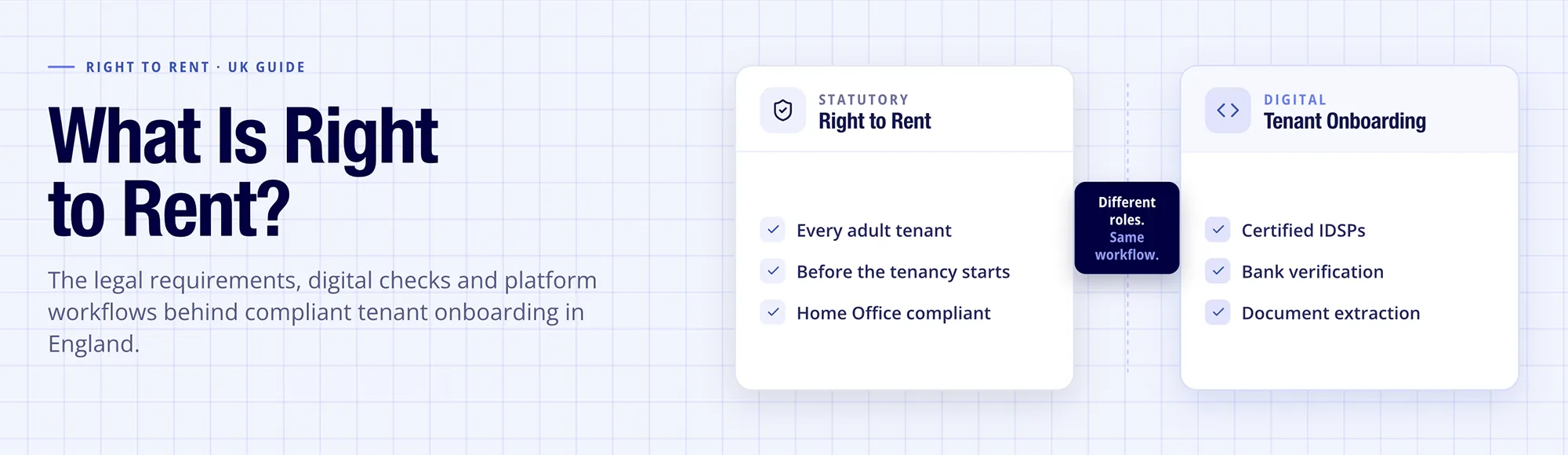
What Is Right to Rent? UK Requirements and Digital Checks
Learn what is right to rent, the legal requirements for landlords in England, and how right to rent checks fit into modern tenant onboarding. Compare certified IDSPs with complementary verification workflows and see where Finexer supports lettings platforms without replacing statutory Right to Rent checks.
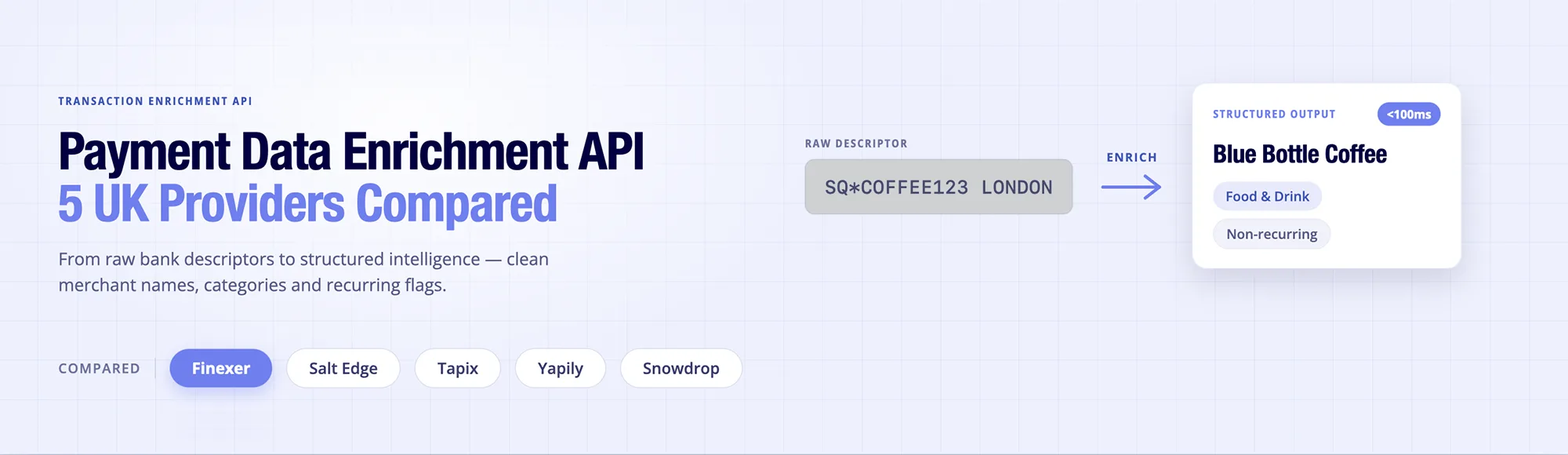
Payment Data Enrichment API: 5 UK Providers Compared
Your accounting platform receives 50,000 bank transactions daily. However, your bank descriptions arrive as cryptic codes that are hard to decipher. Your finance team can’t tell if it’s office supplies, cloud services, or equipment. They spend hours manually categorising transactions. Reconciliation slows down. Support tickets increase because users see unclear merchant names in their feeds. […]
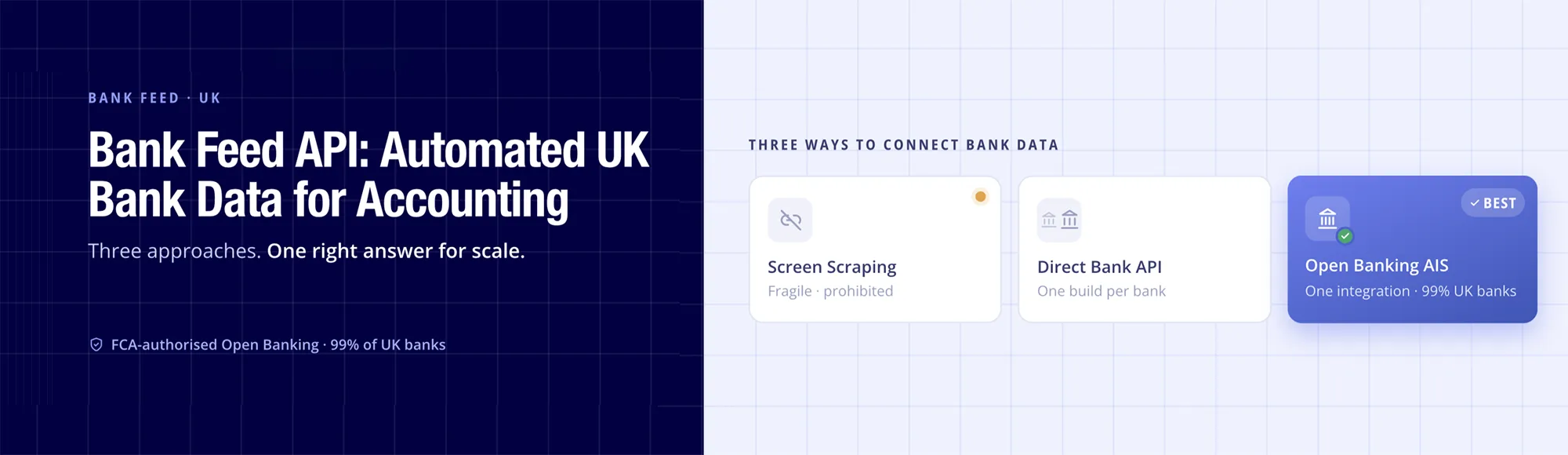
Bank Feed API: Automated UK Bank Data for Accounting
Bank feed solutions for accounting platforms- real-time data syncing from UK banks without manual CSV uploads. Learn how screen-scraping differs from Open Banking PIS, refresh frequency, and build vs buy decisions for accounting SaaS.
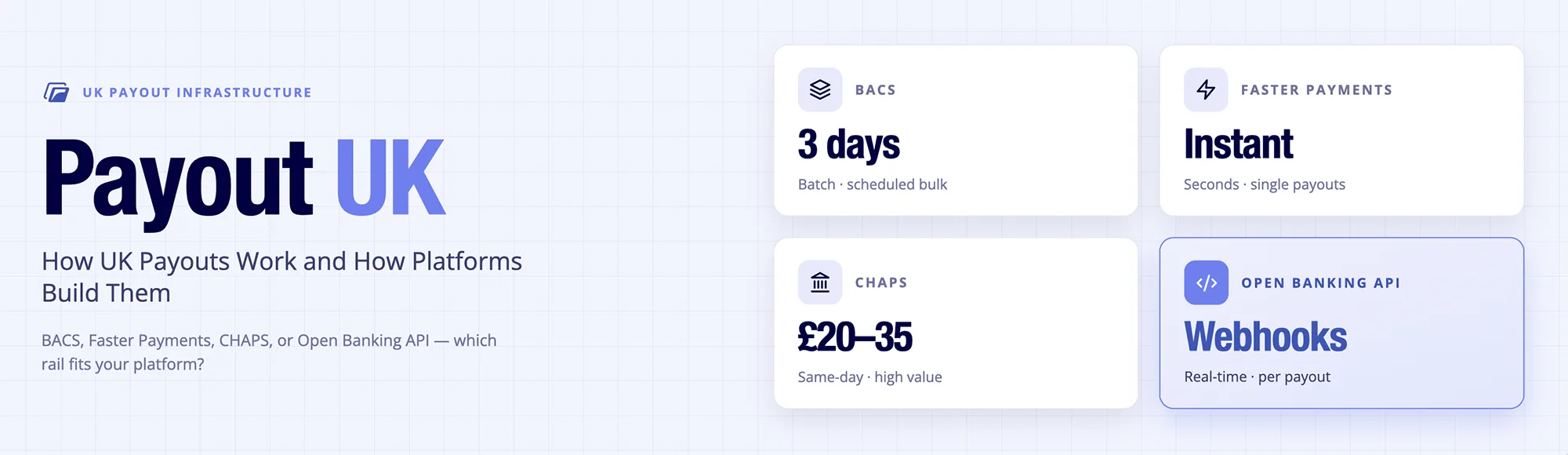
Payout UK: How UK Payouts Work and How Platforms Build Them
Discover how payout UK infrastructure works for businesses and platform builders. Compare BACS, Faster Payments, CHAPS, and Open Banking APIs to understand settlement speeds, payment visibility, and automation, helping you choose the right approach for high-volume, scalable payouts across the UK.